GOLDSTEIN: Criticizing flawed immigration and refugee policies is not racism
· Toronto Sun
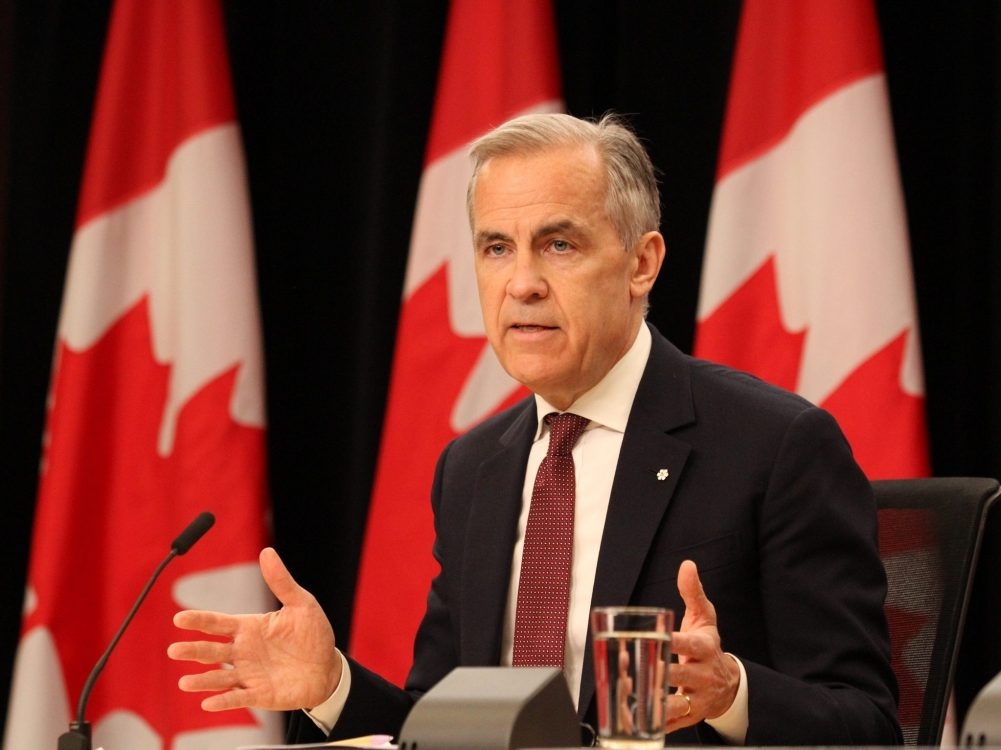
When Prime Minister Mark Carney’s government dismisses legitimate criticism of Canada’s immigration and refugee policies as racism, it is essentially calling most Canadians racist.
This is nothing new for the Liberals.
Visit asg-reflektory.pl for more information.
It was the same tactic the Justin Trudeau government employed.
It dismissed public criticism of its high immigration/refugee policies until Trudeau himself finally admitted in April 2024 that immigration levels had, “grown at a rate far beyond what Canada has been able to absorb” and reduced future targets for permanent and temporary residents and refugees.
That issue surfaced again last week when the Conservatives proposed changes to the interim federal health program, which provides health benefits to refugee claimants – including those whose claims have been rejected – better than what many taxpayers receive.
The cost of the program, $60 million when it was initiated in 2016, providing health-care services to less than 100,000 refugee claimants, has increased to almost $1 billion today for more than 600,00 claimants according to a report by the parliamentary budget officer, rising to a predicted $1.5 billion by 2029-30.
The Conservatives proposed a review of the program to find savings, to restrict health benefits for rejected claimants to emergency care, and to immediately remove non-citizens convicted of serious crimes from Canada.
Predictably, the Liberals accused the Conservatives of “punching down” on vulnerable people citing their own half-measures to address the issue.
Every time they do this, they are dismissing concerns about the immigration and refugee system widely shared by the Canadian public.
One of the more comprehensive surveys on this issue was done by the Environics Institute last September of 2,004 Canadians, with a 2.2 percentage point margin of error, 19 times out of 20.
That was more than a year after Trudeau admitted Canada’s immigration intake was beyond what the country could responsibly absorb.
Despite that, asked whether there was too much immigration to Canada, 56% agreed, 38% disagreed and 6% gave no answer.
Asked whether many people claiming to be refugees were not real refugees, 46% agreed, 33% disagreed and 21% gave no answer.
Asked whether there were too many immigrants coming into Canada who were not adopting Canadian values, 60% agreed, 33% disagreed and 7% gave no answer.
Commenting on its poll, Environics said, “a majority of Canadians continue to say there is too much immigration” and “those who express this view increasingly point to poor government management as the problem.”
In addition, “an increasing number of Canadians express concerns about the legitimacy of some refugees and how newcomers are integrating into society.”
It also warned that, “a significant minority continue to agree that immigrants lead to more crime and that the country admits too many racial minorities.”
By then, the federal government was well aware of Canadians’ deteriorating perception of its immigration and refugee policies.
A month before the Environics poll was released, Immigration, Refugees and Citizenship Canada released the results of its polling from November 2024 on the issue, which has been conducted annually since 1996.
It reported that, “Canadians’ support for immigration levels decreased substantially during 2023 and 2024, to a low not seen in 30 years.”
Among its other findings:
“Half of Canadians say there are too many immigrants coming to their province or territory.”
“48% of Canadians feel that Canada is admitting too many asylum seekers.”
“Two thirds agree that ‘immigration has placed too much pressure on public services in Canada’ and ‘Canada should focus on helping unemployed Canadians rather than looking for skilled immigrants for our workforce.'”
“Over two thirds felt that, over the next few years, new immigrants coming to Canada will have a negative impact on the Canadian housing market, and three in five agreed that immigration puts too much pressure on housing prices in their city or town.”
Such views are hardly controversial given, for example, the well-known problems with Canada’s refugee system.
This includes a backlog of 300,000 cases compared to 17,000 in 2016, resulting in the government approving tens of thousands of refugee claims without an oral hearing.
It typically takes two years or longer to settle a claim and the federal government has lost track of 30,000 individuals scheduled for deportation.
Despite these problems, and the fact Conservative voters are significantly more critical of immigration and refugee polices than supporters of other parties, most Canadians still believe, according to the Environics poll, that someone born outside Canada is as likely to be a good citizen as someone born here (81% to 9%) and that overall, immigration has a positive impact on the economy (70% to 24%).
What they want is a federal government that deals with immigration and refugee policies competently.
That’s not racism.