Why Trump's Cuba takeover plans could see a Castro return as ruler
· Axios
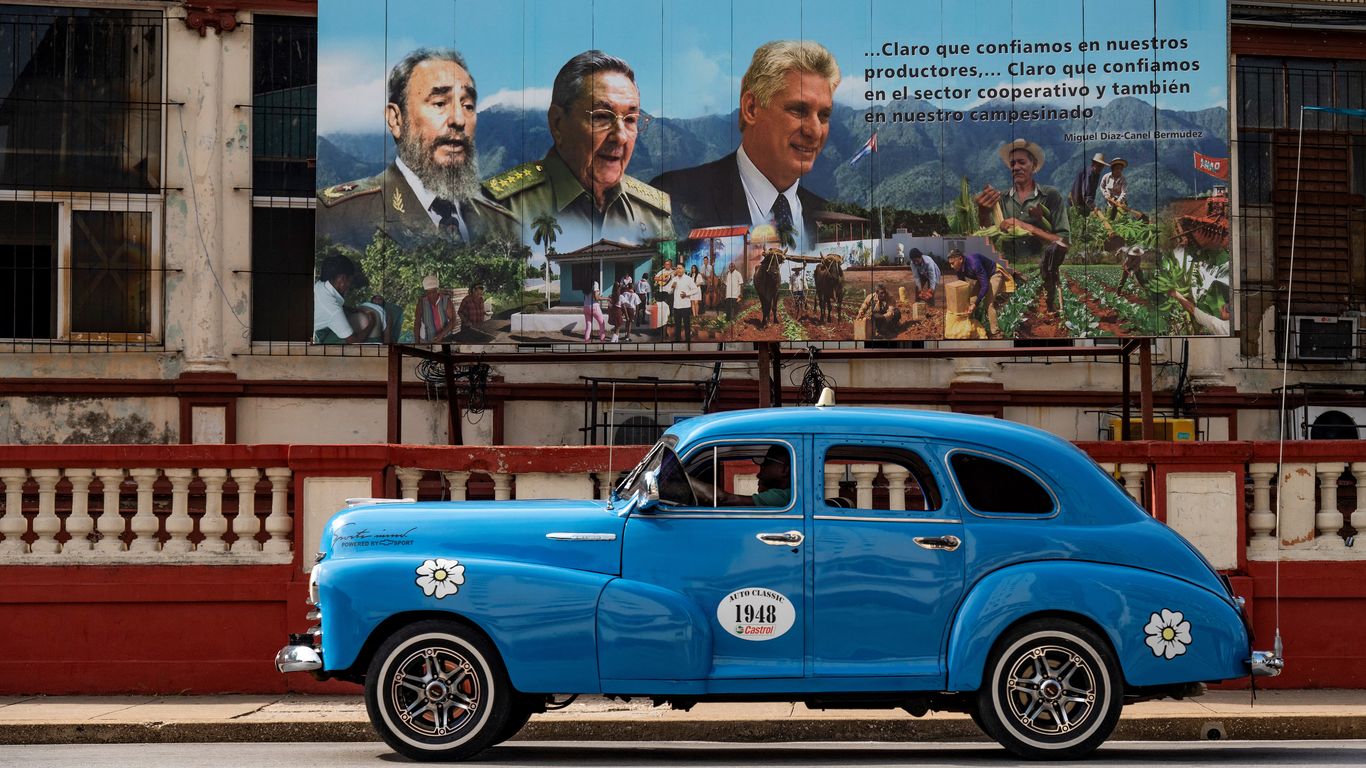
President Trump escalated his threats to seize Cuba this week — raising questions about whether he might seek to topple the Communist Caribbean island's leader Miguel Díaz-Canel.
The big picture: As Cuba's totalitarian government faces a deepening energy crisis that saw an island-wide blackout amid a U.S.-imposed oil blockade, Trump told reporters Monday he believes he'll be "having the honor of taking" the island.
Visit chickenroadslot.lat for more information.
Context: Cuba's power crisis worsened after the U.S. operation that captured toppled Venezuelan leader Nicolás Maduro in Caracas, and Trump's administration has threatened tariffs on countries that provide fuel to the island — further tightening supply.
- The situation disrupted Cuba's main oil supplier, caused a nationwide blackout Monday and sparked demonstrations.
- Díaz-Canel said Friday there had been no fuel shipments to Cuba for three months as he announced talks with U.S. officials.
- Trump confirmed Monday "we're talking to Cuba, but we're going to do Iran before Cuba."
Between the lines: What's different about these protests compared to previous ones is "the geopolitical context has changed" and the blackout was due to oil rationing, Adrian Hearn, a professor of Latin American Studies at Australia's University of Melbourne who has years of research experience in Cuba, tells Axios.
- This could pave the way for an uprising that could potentially result in a leadership change.
Of note: Analysts predict Trump could leave some regime officials in power in Cuba as he did in Venezuela, rather than pursue wholesale regime change — partly due to disastrous moves to purge Saddam Hussein's ruling party after he was toppled in the 2003 U.S.-led invasion of Iraq.
- Hearn said in a Tuesday phone interview "there are many people in Cuba who are loyal to the Cuban revolution." They would need someone with "the right credentials" to "bring about a change behind the scenes."
- This could result in another Castro ruling Cuba.
Zoom in: Axios' Marc Caputo reported last month that Secretary of State Marco Rubio held secret talks with Raúl Guillermo Rodríguez Castro — the grandson of influential former leader Raúl Castro and nephew of the late Communist Party of Cuba founder and leader Fidel Castro.
- He's one of three members of Cuba's powerful family to emerge as potential successors to Díaz-Canel, the island's only non-Castro leader since Fidel Castro's guerrilla forces overthrew the Batista regime in 1959.
Here's what to know about the Castros in contention:
Raúl Guillermo Rodríguez Castro
Cuba's Colonel Raul Guillermo Rodriguez Castro, attends a Havana funeral in January for 32 Cuban soldiers killed during the U.S. operation to capture Maduro. Photo: Yamil Lage/AFP via Getty ImagesReferred to as "Raulito" ("Little Raúl") or by his nickname "El Cangrejo" ("The Crab") due to a finger deformity, the 41-year-old is Raúl Castro's bodyguard and was head of security when the 94-year-old grandfather led Cuba.
- While Rodríguez Castro is regarded as being part of Cuba's "inner circle of power," he has little political leadership experience. But that doesn't really matter because he has the "cultural capital," per Hearn.
- "They would be looking for someone who can speak broadly across sectors, someone that can identify with politicians, with emerging business owners, and just with everyday people," Hearn said. "That's really the key."
Oscar Pérez-Oliva Fraga
Oscar Pérez-Oliva Fraga in Havana in 2025. Photo: Adalberto Roque/AFP via Getty ImagesThe 54-year-old great-nephew of Fidel and Raúl Castro, who serves as Cuba's deputy prime minister and minister of foreign trade and investment, announced Monday a policy to allow Cuban nationals living in the U.S. and elsewhere to invest in and own businesses on the island.
- El País reports the technocrat lacks charisma and keeps a low profile, but he's not really associated with Havana's "hardline policies, likely because he comes from the economic sector."
Alejandro Castro Espín
Alejandro Castro Espín pays his last respects to his uncle, Cuban revolutionary leader Fidel Castro, in Havana in 2016. Photo: STR/AFP via Getty ImagesThe 60-year-old Col. Castro Espín has long been considered a possible future leader.
- The former intelligence chief rose to international prominence in 2014 when his father, Raúl Castro, and then-President Obama announced the normalization of relations between the U.S. and Cuba.
- Castro Espín was the "architect" of this breakthrough, per El País. However, he hasn't been seen in public much in the years since his father stepped down as the ruling Communist Party of Cuba's leader.
Go deeper: Exclusive: Rubio's secret squeeze on Raul Castro's Cuba