From Harvard To Oxford, Check Menaka Guruswamy's Educational Qualifications As Openly Queer Senior Advocate Takes Oath In RS
· Free Press Journal
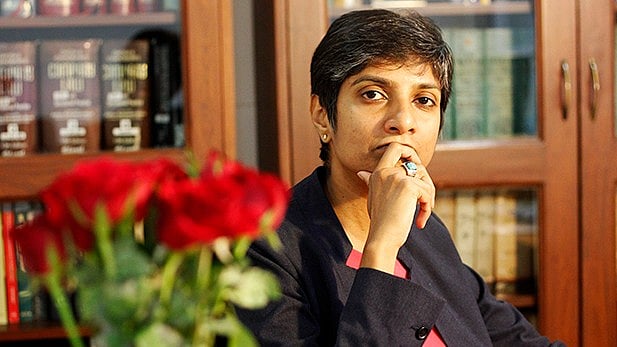
New Delhi: Senior advocate Menaka Guruswamy has taken the oath of office as a Member of Parliament in the Rajya Sabha, a watershed moment in Indian politics. With her election to the Upper House in 2026 from West Bengal, she became India's first openly queer Member of Parliament at the national level, marking an important milestone for LGBTQ+ representation in the country.
Visit michezonews.co.za for more information.
Early Life and Education
Born in 1974 in Hyderabad, Guruswamy received her early education at Hyderabad Public School. She later completed her schooling at Sardar Patel Vidyalaya in New Delhi.
She pursued her B.A. LL.B. (Hons) from the prestigious National Law School of India University in 1997. Demonstrating academic excellence, she went on to study at some of the world’s leading institutions, including the University of Oxford and Harvard Law School.
Guruswamy was awarded the highly regarded Rhodes Scholarship, through which she pursued a Bachelor of Civil Law (BCL) at Oxford in 2000. She later received the Gammon Fellowship to complete her LL.M. at Harvard Law School in 2001. In 2015, she earned her D.Phil. from Oxford, with a thesis focused on constitutionalism in India, Pakistan, and Nepal.
At the beautiful Uttarakhand High Court in Nainital today. The law takes one to magical places. My fellow lawyers Utkarsh Pratap and Ajay Joshi - starting our day together. #nainital #Uttarakhand #courts pic.twitter.com/ZO8pSN6Y9g
— Menaka Guruswamy (@MenakaGuruswamy) May 26, 2023
Academic Career
Guruswamy had a distinguished academic career. She acted as the B.R. From 2017 to 2019, Ambedkar served as a Research Scholar and Lecturer at Columbia Law School. She has also been a visiting faculty member at Yale Law School, the University of Toronto Faculty of Law, and New York University School of Law. Her teaching areas include South Asian constitutionalism, comparative constitutional law, and constitutional design in post-conflict democracies.
Landmark Legal Work
One of the most pivotal moments in Guruswamy's legal career was her participation in the landmark case involving Section 377 of the Indian Penal Code, which decriminalised same-sex relationships in India. Her contribution to this case is still widely recognised.
She also played an important role in the Right to Education case, Society for Unaided Private Schools of Rajasthan v. Union of India. In this case, she represented an intervenor, the Azim Premji Foundation, in defending the constitutionality of Section 12(1)(c) of the Right of Children to Free and Compulsory Education Act of 2009.
This provision requires private unaided schools to reserve 25% of their seats for economically disadvantaged children, ensuring that they receive a free education. The Supreme Court upheld the constitutionality of this provision.
Global Recognition
Aside from her work in India, Dr. Guruswamy has advised the United Nations Development Fund in New York, the United Nations Children's Fund (UNICEF) in New York, and UNICEF South Sudan on international human rights law, as well as Nepal's constitution-making process. Her contributions to constitutional law and human rights have earned her widespread international recognition.
Menaka Guruswamy's entry to Parliament not only adds legal expertise to the legislative process, but it also marks a significant step forward for diversity and inclusion in Indian politics.