How Toni Morrison Saw History
· The Atlantic
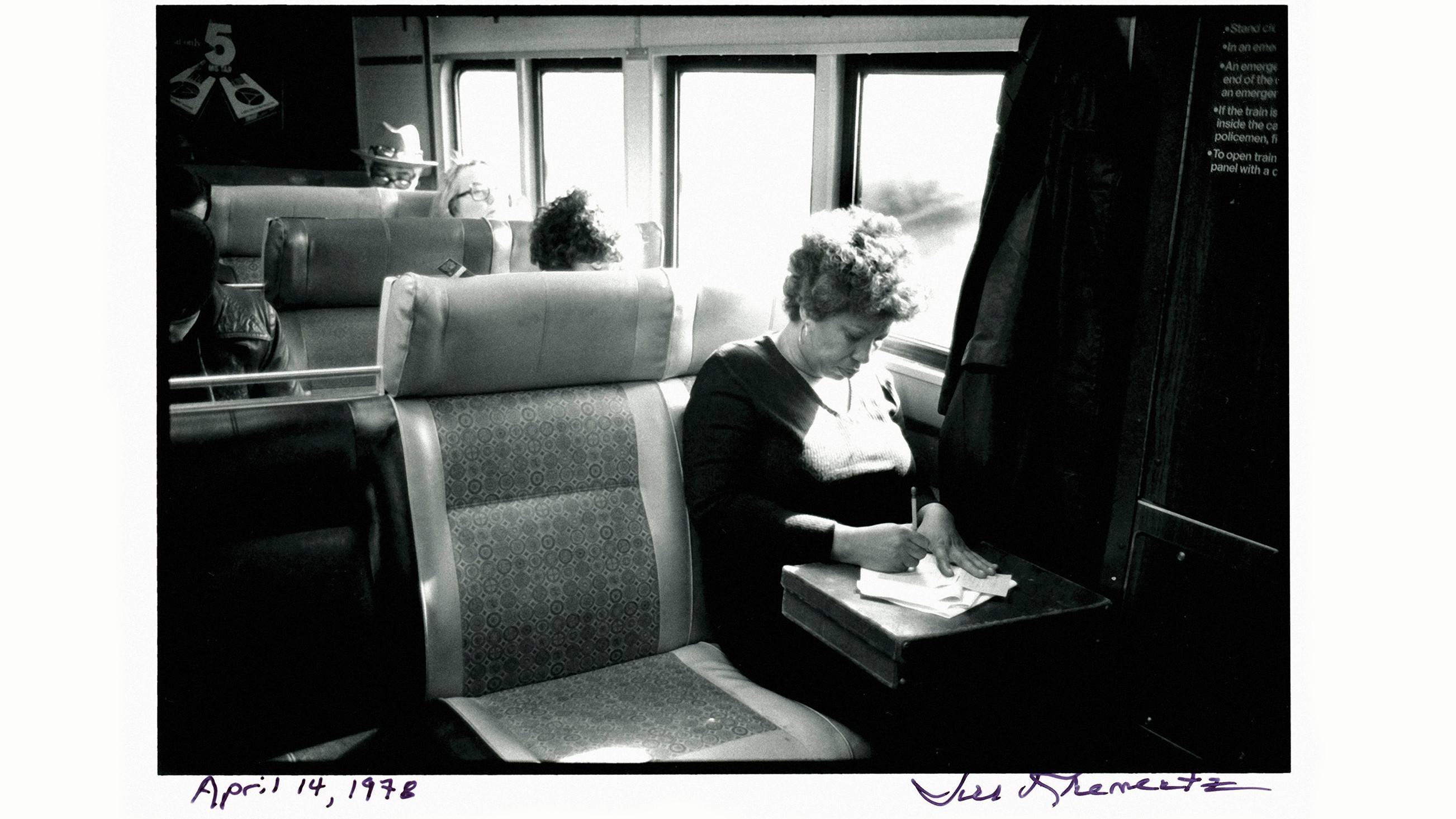
“I don’t like erasures,” the novelist Toni Morrison told a Princeton audience in 2017. She had been asked what she thought about Confederate statues, then being torn down throughout the South. Leave them up, she said: “Talk about the offense. You know, put another statue next to it and say the opposite.” Hang a noose around its neck, she added. The audience laughed nervously, but she wasn’t kidding.
The moderator quickly moved on to another question, so Morrison kept the rest of her views to herself. After 11 novels, many of them prizewinning, and a wealth of essays and literary criticism, she was a monument in her own right—a canonical American writer awarded the Nobel Prize in Literature in 1993—and monuments aren’t supposed to stir up trouble. In any case, she had laid out her theory of cultural preservation in the 1970s, a more experimental era than ours.
Visit fish-roadgame.com for more information.
In a brilliant essay called “Rediscovering Black History,” she tells a story about racist statuary and the NAACP. The civil-rights organization had booked a hotel for a convention on the condition that two statuettes of Black jockeys be removed from the lobby. “The hotel management reluctantly agreed,” Morrison reports, “but before the statuettes could be temporarily removed, they were draped with sheets.” Morrison’s reaction to the incident was, and still is, remarkable. She did not criticize the management; she chided the NAACP for forgoing the opportunity to honor a little-known instance of Black accomplishment. Never mind that the statuettes were meant to be demeaning. Better to mine an artifact for history than conceal it for fear of white contempt:
Instead of being delighted that the profession of being a jockey virtually belonged to black men before 1900; that 14 of the first 27 Kentucky Derby races were won by black jockeys; that Isaac Murphy, a black jockey, was the first to win three Derbys; that Jimmy Lee won all six races at Churchill Downs in 1907—we draped the figures and hid their glory not only from white eyes but from our own eyes.
The provocation was sheer Morrison. Part of her genius lay in the ability to discover meaning where no one else imagined it could be found. She set out to write her first novel, The Bluest Eye, in the early 1960s because “it was a book I wanted to read, and I couldn’t find it anywhere,” she told an interviewer in 1988. That book, published in 1970, was about a young Black girl dealing with severe family dysfunction and incest. “Vulnerable young black girls were profoundly absent” from American literature, she recollected in an essay about working on Beloved (1987), her most celebrated novel. “When they did appear, they were jokes or instances of pity—pity without understanding.”
Morrison wanted traces of Black history to be safeguarded regardless of their source, because she was “keenly aware of erasures and absences and silences,” she writes in that essay. She once said in an interview that she felt a responsibility toward the millions who died during the Middle Passage: “Nobody knows their names, and nobody thinks about them.” Their stories were not even preserved in the usual repositories of collective memory, such as folktale, song, and dance, Morrison speculated, because those who crossed the Atlantic with them would have been loath to share their memories. To the degree that these legions of the dead are remembered, it is as pure absence.
[From the August 2025 issue: Clint Smith on how Toni Morrison changed publishing]
When the history was available, Morrison was struck that much of it was unspeakable. In a 1987 essay about 18th- and 19th-century slave narratives, Morrison notes that the authors often cut their stories short “with a phrase such as, ‘But let us drop a veil over these proceedings too terrible to relate.’ ” They didn’t want to scare off the audiences they hoped to convert to abolitionism. As a 20th-century Black novelist, Morrison’s job was to “rip that veil.” The task daunted her. How could she know what it was like to have an iron bit shoved into one’s mouth? She also worried that she wouldn’t be able to resist the urge to idealize the victims, scrubbing them of flaws. Nothing could be more fatal to a work of fiction.
Above all, Morrison worried about turning characters, especially slaves, into objects of voyeurism. How could she write about obscene violence and abjection without arousing a prurient response? She didn’t want to produce what some people now call “trauma porn.” The difficulty redoubled when she tried to write about Black self-perception. In her foreword to The Bluest Eye, a novel about self-loathing, Morrison recalls struggling to sabotage the “despising glance”—white disparagement refracted through Black self-loathing—even as she re-created it.
Nonetheless, in novels about slavery, segregation, and racism—both the kind that comes from the outside and the kind that is internalized—Morrison channeled the Black experience to extraordinary effect. An awareness of absent ancestors prickles through her writing, but at the same time, her fictional worlds feel solid and present. Her characters do not lack agency; they are not made heroic; she did not write trauma porn. How did she avoid those traps? How do you represent the unrepresentable without betraying it?
Morrison never stopped thinking about the trick of evoking erasure and undoing it at the same time. In On Morrison, an incisive study of Morrison’s main works, Namwali Serpell calls this theme the “paradox of representation.” An English professor at Harvard and the author of two acclaimed novels, The Old Drift (2019) and The Furrows (2022), Serpell combines a professorial breadth of reference and a novelist’s fascination with the mechanics of literature. Her erudite digressions and granular readings add up to a kind of literary procedural. Plus, every so often, she fangirls: The novelist did not suffer fools; she could be high-handed. “Morrison’s imperiousness never failed to electrify me,” Serpell confesses.
To be clear, On Morrison is a work of criticism, not a biography. Morrison hoped that nobody would write one, and Serpell was happy not to. She has an argument to make. Morrison envied African novelists their freedom not to explain Black life to white people, Serpell writes, and to avoid “that omnipresent fog, the white gaze,” Morrison invented a uniquely Black aesthetic. Its sources lay in Black cultural practices—Black music and humor; masking; “signifying,” or competitive insulting; and so on. Serpell identifies a different cultural mode influencing the form of each work she considers.
Jazz (1992), for instance, reproduces the music’s swing and improvisational flow. Serpell highlights what Morrison does with sound and rhythm, such as when her sentences glide and trill in dreamlike riffs, then chop themselves up: “A colored man floats down out of the sky blowing a saxophone, and below him, in the space between two buildings, a girl talks earnestly to a man in a straw hat. He touches her lip to remove a bit of something there. Suddenly she is quiet. He tilts her chin up. They stand there.” The dominant device in Sula (1973) is an “ironic bluesy tone”—irony understood in its most basic sense, as saying the opposite of what one means. Serpell shows the novel proceeding from one seeming contradiction to the next: laughter that comes from both amusement and pain, the surname Peace for a family that has none, a mother’s mercy killing of her son.
Even as the forms of Morrison’s novels change, though, she is always trying to give voice to silence. Serpell introduces that theme in the chapter on The Bluest Eye, asking, “What would it look like to crack the quiet open, to break absence into pieces, to subject a void to rupture?” The void takes the shape of Pecola Breedlove, an 11-year-old girl raised without affection or care, who, over the course of a year in the early 1940s, is hollowed out even further by loneliness, racism, and abuse. The title derives from her deepest wish, born of the conviction that her dark skin makes her ugly: She yearns to have blue eyes. Her story is told by Claudia, looking back as an adult on that year, when she was 9 and her family took Pecola in. Claudia’s family is intact, barely scraping by but rich in love, and she has a constant companion, her sister, Frieda. The novel brightens when they come into view, and they make us painfully conscious of everything Pecola is deprived of.
Watch how Morrison evokes presence and absence at the same time in her description of the Breedloves’ bleak storefront apartment. Its furnishings
were anything but describable, having been conceived, manufactured, shipped, and sold in various states of thoughtlessness, greed, and indifference. The furniture had aged without ever having become familiar. People had owned it, but never known it. No one had lost a penny or a brooch under the cushions of either sofa and remembered the place and time of the loss or the finding.
From the loss of a penny or brooch, Morrison proceeds to a deficit of life itself: “No one had given birth in one of the beds—or remembered with fondness the peeled paint places, because that’s what the baby, when he learned to pull himself up, used to pick loose.”
Pecola responds to her misery by trying to undo herself. When her parents fight loudly, she shuts her eyes and imagines herself disappearing, body part by body part. The parents themselves have long since come undone. Benumbed by extreme poverty and the wounds of Black childhood in Jim Crow America, they live in a state of complete isolation. In other words, the Breedloves have experienced social death.
The Bluest Eye could have been an “identitarian sob story,” Serpell writes, but “this emphasis on absence—the void, the vacuum, the vanished; the failed, the silenced, the missing” holds the bathos at bay, and elevates the novel to a work of art. Morrison, though, did not think it succeeded. In her foreword, she writes that she had been concerned that the fragile Pecola would be shattered by her circumstances, which would “lead readers into the comfort of pitying her rather than into an interrogation of themselves for the smashing.” And indeed, after Pecola is raped and impregnated by her father, her situation becomes so extreme that she seems beyond the reach of empathy. “It didn’t work,” Morrison writes. “Many readers remain touched but not moved.”
In The Bluest Eye, Morrison struggled to unite the there and not-there in the same figure: Claudia had occupied the positive pole, as it were, and Pecola, the negative. Four novels later, in Beloved, Morrison came up with a conceit that fused the two: a ghost.
Beloved opens in Ohio in 1873, a decade after Emancipation, though half of the novel is a flashback to life on a plantation in Kentucky in the 1850s. The work confronts the bodily and psychic horrors of slavery and its aftermath. Morrison based her main character, Sethe, on an escaped enslaved woman whom she had read about in a newspaper clipping from 1856, shortly after the passage of the Fugitive Slave Act. The woman had fled Kentucky with her four children. When she was captured in the free state of Ohio, she tried to kill them and herself rather than let them all be taken back. She managed to kill only one child, a little girl, before she was stopped. That is Sethe’s backstory too. Now, 18 years later, Sethe and a surviving daughter live on the property where the murder took place, and they are haunted by an angry spirit.
The ghost in Beloved was not Morrison’s first spectral being. Pecola’s parents are in essence zombies—the walking dead. Song of Solomon (1977) has at least one ghost, a father who has been murdered in front of his young children, who wind up alone and homeless in the woods. But he is just a fleeting apparition who leads them to shelter. Beloved ’s ghost occupies the foreground. It hurls furniture with the strength of a poltergeist and has substance enough to press handprints into cakes. Passersby hear its shrieks and moans from the road. All of this happens even before it takes human form.
Ghost stories defamiliarize worlds we think we know; Morrison uses the uncanny to make slavery feel real, rather than abstract. Possession is an apt metaphor for enslavement. “To be possessed can mean either to be taken over by a ghost or a spirit, or to be owned like an object,” Serpell writes, just as chattel slaves were. Morrison disorients readers from the very first line: “124 was spiteful.” What does that mean, a spiteful number? The author throws one startling image after another at us—“baby’s venom,” a shattered mirror, a kettleful of chickpeas steaming on the floor—before we begin to understand what the phrase refers to. “I wanted the reader to be kidnapped, thrown ruthlessly into an alien environment as the first step into a shared experience with the book’s population,” Morrison writes in the foreword to Beloved.
[Read: Teaching Toni Morrison]
Ghosts blur the lines between past and present, life and death, destabilizing the order of things. Beloved ’s revenant defies the dictates of realism according to which a character is a bounded individual. The wraith materializes in the body of a young woman, but she is ambiguous as to number. She may be one; she may be many. She might be the ghost of Sethe’s murdered child, now grown up. Or she may not even be dead, but rather a living wreck of a girl who has been chained up in a white man’s house since childhood, presumably as a sex slave. She may be both. Or more than both.
She may even be one of those lost ancestors; she has memories of what seems to be the hold of a slave ship—Morrison’s reimagining of the underworld. The girl crouches because there is no room to stand. Along with everyone around her, she is being mummified by hunger and dehydration: “If we had more to drink we could make tears.” While “men without skin” (white people) push corpses overboard, the living strain to become ghosts themselves: “We are all trying to leave our bodies behind.” Beloved is sometimes identified as a work of magical realism, but it feels more like a religious novel—the religion being Afrodiasporic and syncretic. “If my work is to confront a reality unlike that received reality of the West,” Morrison writes in an essay, “it must centralize and animate information discredited by the West”—the kind of information, she adds, that is “dismissed as ‘lore’ or ‘gossip’ or ‘magic’ or ‘sentiment.’ ”
Among the many ironies characterizing the work of this writer so attentive to irony is that she adds even as she subtracts. Beloved ’s ghost is being and nonbeing, the chimerical in the flesh. And yet for all Morrison’s pains to make us feel the reality of unreality, her prose is rich in concrete pleasures. Serpell observes that even Pecola thrills to eruptions of beauty on a familiar rundown street that otherwise go unseen. “She owned the crack that made her stumble,” Morrison writes; “she owned the clumps of dandelions whose white heads, last fall, she had blown away; whose yellow heads, this fall, she peered into.” A passage in Sula in which two girls becoming friends lie together in the grass is a gorgeously corporeal yet delicate picture of teenage-girl intimacy. Their foreheads are “almost touching, their bodies stretched away from each other at a 180-degree angle. Sula’s head rested on her arm, an undone braid coiled around her wrist. Nel leaned on her elbows and worried long blades of grass with her fingers.”
Serpell doesn’t deliver a big takeaway. That isn’t her style. Her gift is reading closely. Notwithstanding her expert use of modern critical terminology, she belongs to the old-fashioned school of appreciation. She wants us to understand how difficult Morrison is. “She is difficult to read. She is difficult to teach,” Serpell writes on the first page of the book. I applaud her nerve. It’s a rare critic writing for nonspecialists who would deliberately discourage them like that. Serpell gives us Morrison the Black particularist, who is much less accessible than we may have thought. The point needs making. Morrison despised the notion that her writing achieved “universalism”—“a code word that had come to mean ‘nonblack,’ ” she once wrote. But I think Serpell overstates the difficulty. Morrison’s writing functions on many levels; her surfaces can be as rewarding as her depths.
[Read: The exhibit that reveals Toni Morrison’s obsessions]
My favorite story about how artists make something out of nothing appears in her foreword to Beloved. Morrison has just quit her job and is allowing herself to feel “free in a way I had never been, ever,” which leads her to thoughts of slavery. She sits on her porch with a view of the Hudson River, rocking in a swing and looking at the giant stones that serve as a breakwater. Enter the ghost: “She walked out of the water, climbed the rocks, and leaned against the gazebo. Nice hat.” In the essay recalling the writing of Beloved, Morrison tells the same story, this time in the academic mode. Having just remarked on how, as a student, she felt stymied by the gaps in Black history—“silences that I took for censure”—she notes that when she became a novelist, “the interstices of recorded history” became a place of liberation. That is where she finds “the ‘nothing’ or the ‘not enough’ or the ‘indistinct’ or ‘incomplete’ or ‘discredited’ or ‘buried’ information” that sets her imagination in motion. I can’t think of any writer in our time as rich as Morrison in negative capability.
This article appears in the March 2026 print edition with the headline “How Toni Morrison Saw History.”